Digital Skills Library · Design & Creative
How to freelance with music & voice talent
What freelance musicians, composers, and voice talent charge in 2026, the services clients hire for, and the path from real talent to your first paying client.
Difficulty
3 of 5
Real talent plus craft; the ability must already be there, the freelance business around it is learnable
First dollar
Medium
Build a sample set first, then steady project-based demand for music and voice
Startup cost
Low-medium
Free recording and production software exists; a decent microphone helps for audio
AI-friendliness
Medium-high
AI tools pressure the cheap, generic end; original, emotive human work stays valued
Demand
Steady and niche
Video, ads, games, and brands constantly need custom music and voice
Start here
Go from curious to freelance-ready
This page shows you what freelance performing-arts work is like: the pay, the services, and whether it fits you. The full guide inside the Digital Skills Library walks you through getting started: what to learn first, where to learn it, and how to practice until you're ready to offer it as a freelance service. Here's what unlocks for this skill:
- 🔒 A 4-week freelance business plan built around the talent you already have
- 🔒 Hand-picked free tools and channels, with the why behind every pick
- 🔒 The recording and delivery setup that makes you look professional on day one
- 🔒 A focused sample portfolio you can build before you land a single client
- 🔒 Ready-to-use AI prompts for briefs, pricing, and client replies
- 🔒 How to price for usage, the single biggest lever on your rate
- 🔒 The big-picture map: first short pieces, then custom projects, then an ongoing audio partnership
- 🔒 Updates whenever the tools and the market change
The skill, straight
What does freelance performing arts work look like?
Performing arts as freelance work means selling your musical or vocal talent: composing original music, writing jingles, recording vocals or instruments, producing tracks, and voice acting. Brands, video creators, game makers, and media companies constantly need custom audio, and they hire skilled people to create it. AI music and voice tools got good fast, and they pressured the cheap, generic, stock-audio end of the market, but original, emotive, custom human work keeps its value.
01
Turn real musical or vocal talent into paid work
Original music, jingles, vocals, and voice performance for video, brands, games, and other creators. The talent has to be real; I teach the business around it.
02
Hit someone else's brief, in your own voice
A client's brand, video, or character comes first; your style is what makes their project sound right. Serving the brief and sounding like yourself go together.
03
Price and deliver like a professional
Clean, correctly formatted files, and a price that accounts for how the work will be used. Usage and licensing are worth more than raw hours.
Is performing arts right for you?
Yes
You are a capable musician, singer, composer, or performer, and you want to turn that ability into client work. If people already ask you to make music or perform, this is about turning that into a business.
Maybe
You are still building your craft. Keep developing it, take small pieces as you grow, and treat this as the next step once the ability is real.
No
You have no musical or performance ability yet and need income soon. Pick a faster-to-learn lane and keep this going on the side.
Best for skilled musicians, singers, and voice talent who want to turn their craft into client work. If people already pay you, or beg you, to make music or perform, this is about turning that into a freelance business.
Real talk, because it matters more here than in most lanes: this is talent plus craft. Most Library skills you can learn from zero in a few weeks; performing arts assumes you already have real ability. If you don't yet, this is a longer road than most lanes in the Library, and a more learnable skill might get you to your first dollar faster.
Pick a lane
Performing-arts services you can sell
Clients already know the specific fix they need before they ever search for you. "I write original jingles for small brands" beats "I can make any kind of music" every time.
Your Free Unlock
Get the full member version of this guide, free
Everything on this page is the short version. The member guide goes all the way: the step-by-step learning plan, the tools, the AI prompts, and the practice projects that build real skill. Every person gets one guide free, and it can be this one.
Unlock This Guide Free → One Free Guide Per PersonAlready unlocked a guide, or already a member? Log in here.
How the money grows
The performing-arts service ladder
Four steps from your first short piece to an ongoing audio partnership. These prices are market averages, and premium freelancers charge well beyond them.
Starter
Short piece
$50–300+/piece
A short jingle, a loop, a single vocal take, or a brief voice or music clip. A bounded, fast first job.
Core
Custom track / performance
$300–1K+/project
An original track, a full jingle with vocals, a song, or a vocal or instrument session for a client's project.
Premium
Score or full production
$1K–5K+/project
A full score for video or game, a produced song, or a complete branded audio identity.
Retainer
Audio talent partner
$1K–5K+ /mo
Ongoing music, vocals, or voice work for a creator, studio, or brand: recurring tracks and content. Everyone starts hourly; retainers come once your rate and portfolio are built (I teach them in my final course).
Who buys music & voice talent?
Anyone building something that needs a sound and doesn't have the talent in-house. You've heard every one of these:
People hire performing-arts talent when they need audio a machine or a stock library can't give them, and they need someone whose sound fits the project. Usually right after a launch, a campaign, a new video series, or a rebrand forces the question.
The numbers
How much do musicians & voice talent make?
You've probably scrolled past the $5 voiceover gigs on marketplace sites, someone reading a script in their closet for less than a coffee costs. Skilled music and voice freelancers charge nowhere close to that. The ranges below are an example of what average freelancers charge on Upwork in 2026, and they're a good reference while you're starting out. Inside FREELANCE with ERICA, you'll learn how to position your services for premium pricing over time.
Beginner
$20–50/hr+
Real skill and a few clean samples in your style, or $50–300 per short piece.
Intermediate
$50–100/hr+
Reviews, a signature sound, and full custom tracks or performances, or $300–1,000 per project.
Advanced
$100–250/hr+
Scores, produced songs, and licensing-savvy contracts, where pricing for usage becomes the real skill, or $1,000–5,000+ per project.
Pricing for usage is where the real money is. A track used in a small personal video and the same track used in a national ad take the same amount of work to record, but they are worth very different amounts. Learning to price by usage and licensing is the single biggest lever on your rate, and every number above ends in a plus for a reason: keep climbing past it.
One more thing, and I want you to really hear this: those ranges are averages, and averages have zero say over what you get to charge someday. As you work through my courses, you'll learn how to stack skills and position your services, so you can become a premium freelancer who charges above the market. Here's my own example: I'm a sales copywriter. Look up copywriters on Upwork and you'll see averages between $10 and $75 an hour. I regularly charge over $200 an hour for the same skill, because there are clients who happily pay for real expertise, and you only need a handful of them.
Free guide
Not sure this is your lane?
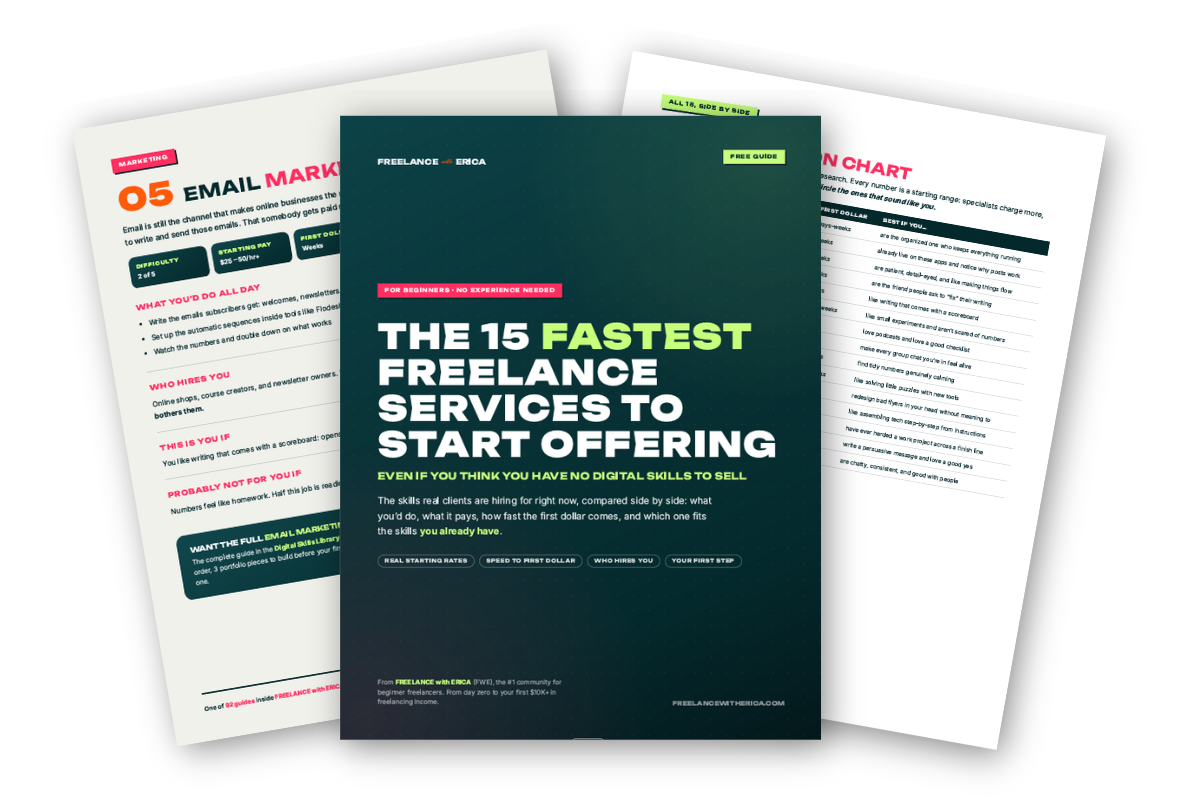
Get The 15 Fastest Freelance Services to Start Offering: all 15 compared side by side, with a clear read on which one fits the skills you already have.
📬 Go check your email!
Your free guide is on its way to your inbox right now. If it plays hide-and-seek, peek in the spam or promotions folder.
Level up later
Skills that stack with performing arts
The highest-earning freelancers combine two or three skills, so one project turns into steady, ongoing work.
Video Editing
Video creators constantly need original music and audio. Offering both makes you a one-stop creative hire.
Read the Guide →Scriptwriting
Jingles and songs need words; video music needs to match a script. Writing skill rounds out audio work.
Read the Guide →AI Content Creation
Content packages increasingly include custom audio. Pairing music or voice with content production wins bigger projects.
Read the Guide →Performing arts FAQ
Can I make money with music or performing arts freelancing?+
Yes, if you have real skill. Brands, creators, game makers, and AI companies all pay for custom music, jingles, vocals, and voice work. It is project-based and niche, but a genuine income for capable people.
Do I need to already be skilled?+
Yes, mostly. This lane assumes real musical or performance ability going in. If you are still building your craft, develop it and start with small pieces, or pick a faster-to-learn Library skill for quicker income and keep this going on the side.
How much does freelance music or voice work pay?+
It varies widely and is usually priced per project: roughly $50–300 for short pieces, $300–1,000 for custom tracks, and $1,000–5,000+ for scores and produced work, with usage rights moving the price a lot. These are typical numbers to plan around.
Is this work safe from AI?+
The cheap, generic, stock end of the market is under real pressure from AI tools. Original, emotive, custom work with real character stays valued. Lean into your sound and the feeling only a real person can bring.
How do I get my first client?+
Upwork has steady "jingle," "music composition," "vocalist," and "voice acting" jobs, quoted per project. Build a sample portfolio in your style, start with short pieces, and learn to price for usage.
Get started, $9/mo
Ready to learn the how?
The full performing-arts guide is one piece of the starting tier. Everything on the right comes with it.
- The full Digital Skills Library, all 90+ guides
- The Find Your Freelance Ready Skills training
- The FWE community chat forum
- Weekly co-working calls
- Five monthly contests for cash
- The monthly accountability challenge
- The proposal tracker that comes with it
- Live guest trainings