Digital Skills Library · Translation
How to become an online language tutor
What language tutors charge in 2026, the platforms that get you your first student fast, and a real read on whether this lane fits you.
Difficulty
2 of 5
Genuinely beginner-friendly if you're fluent; interpretation is a separate, higher-skill lane
First dollar
Fast
Platforms connect you directly to students, often within days of approval
Startup cost
Very low
A laptop, a webcam, a headset, and a quiet room is the whole setup
AI-friendliness
High
AI study apps raised demand for real human conversation partners, not less
Demand
High & durable
Millions learn languages online, and English tutoring especially never slows
Start here
Go from curious to freelance-ready
This page shows you what freelance language tutoring work is like: the pay, the services, and whether it fits you. The full guide inside the Digital Skills Library walks you through turning real fluency into a paid tutoring practice: what to learn first, where to learn it, and how to practice until you're ready to book your first student. Here's what unlocks for this skill:
- 🔒 A 4-week learning plan for turning real fluency into a paid tutoring practice, in order
- 🔒 Hand-picked platforms, communities, and channels, with the why behind every pick
- 🔒 The tutoring tools to set up on day one
- 🔒 3 practice drills you can build before you have a single student
- 🔒 Ready-to-use AI prompts for everyday lesson planning and materials
- 🔒 Which skill to add next, and why it raises your freelance rate
- 🔒 The big-picture map: your first platform student, then professional status, then a specialization or interpretation
- 🔒 Updates whenever the tools and the market change
The skill, straight
What does a language tutor do?
A language tutor teaches the language they already speak fluently to people learning it, usually online, one-to-one, over video. Interpretation is the higher-skill cousin: converting speech between languages live, in meetings, calls, or medical and legal settings. This lane is accessible if you're fluent, especially in English, no teaching degree required to start.
01
Give real conversation practice
An app can drill vocabulary. A patient, real speaker on the other end of the call is the thing no app replaces.
02
Correct gently, and build confidence
The best tutors give feedback that makes a student want to keep talking, not stop and second-guess every sentence.
03
Give the lesson a goal
Fluency, an exam, a job interview: a real lesson moves a student toward something specific, well beyond vague "practice."
Is language tutoring right for you?
Yes
You're a fluent or native speaker (English is especially in demand), you're patient and encouraging, you enjoy people, and you can hold a friendly conversation while gently correcting. Past teaching helps, but it isn't required to start.
Maybe
You're fluent but shy, or unsure you can "teach." The community-tutor lane is just conversation practice, and most learners just want a kind, confident speaker to talk with.
No
You're not fluent in the language you'd teach, or you dislike repetitive, people-facing work. Live interpretation is a separate, higher bar you can grow into later, once you've got real tutoring experience behind you.
Best for fluent or native speakers who are patient and people-loving. If friends have ever asked you to help them with your language, you're already closer to this than you think.
Pick a lane
Tutoring services you can sell
You don't sell "tutoring" in the abstract. You sell specific lesson types students already search for. "IELTS exam prep, taught by a native speaker" competes with almost no one and prices accordingly.
Your Free Unlock
Get the full member version of this guide, free
Everything on this page is the short version. The member guide goes all the way: the step-by-step learning plan, the tools, the AI prompts, and the practice projects that build real skill. Every person gets one guide free, and it can be this one.
Unlock This Guide Free → One Free Guide Per PersonAlready unlocked a guide, or already a member? Log in here.
How the money grows
The tutoring service ladder
Four steps from your first community lesson to a higher-paid interpretation lane, for the bilingual. These prices are market averages, and premium freelancers charge well beyond them.
Starter
Community / conversation tutor
$10–20/hr (after fee)
Casual conversation practice and informal lessons on a platform like italki. The classic no-experience on-ramp for fluent speakers.
Core
Professional lessons
$20–40/hr
Structured lessons with a curriculum, levels, and learning goals, as a reviewed, professional teacher.
Premium
Specialized & direct
$40–80/hr+
Exam prep, business English, or test coaching, increasingly with direct students off-platform at your own rate.
Interpretation
Live interpretation
Higher hourly rates
Real-time interpreting for meetings, calls, medical, or legal settings. A higher-skill, higher-paid lane for the bilingual.
Who books language tutors?
Any learner, parent, or company that needs a real person to talk to, not another app. You've heard every one of these:
Students book a tutor the moment an app plateau, an upcoming exam, or a new job makes real conversation practice urgent. A patient, real speaker is scarce, and learners know it.
The numbers
How much do tutors make?
Some community-tutor gigs on italki start as low as $4 an hour, which is barely "thanks for practicing with me" money. The ranges below are an example of what average freelancers charge on Upwork in 2026, and they're a good reference while you're starting out. Inside FREELANCE with ERICA, you'll learn how to position your services for premium pricing over time.
Beginner
$10–20/hr (after fee)
Community-tutor status, conversation lessons, and building your first reviews.
Intermediate
$20–40/hr
Professional-teacher status, strong reviews, structured lessons, and a steady schedule.
Advanced
$40–80/hr+
A specialization (exam prep, business), direct students at your own rate, and a waitlist. Interpretation pays higher still.
The honest math on platforms: italki takes around 15%, Preply 18 to 33%, and full-time Preply tutors average around $1,400 a month. Treat platforms as the start. The leap is moving specialized, reviewed students off the platform to your own rate, and adding interpretation.
One more thing, and I want you to really hear this: those ranges are averages, and averages have zero say over what you get to charge someday. As you work through my courses, you'll learn how to stack skills and position your services, so you can become a premium freelancer who charges above the market. Here's my own example: I'm a sales copywriter. Look up copywriters on Upwork and you'll see averages between $10 and $75 an hour. I regularly charge over $200 an hour for the same skill, because there are clients who happily pay for real expertise, and you only need a handful of them.
Free guide
Not sure this is your lane?
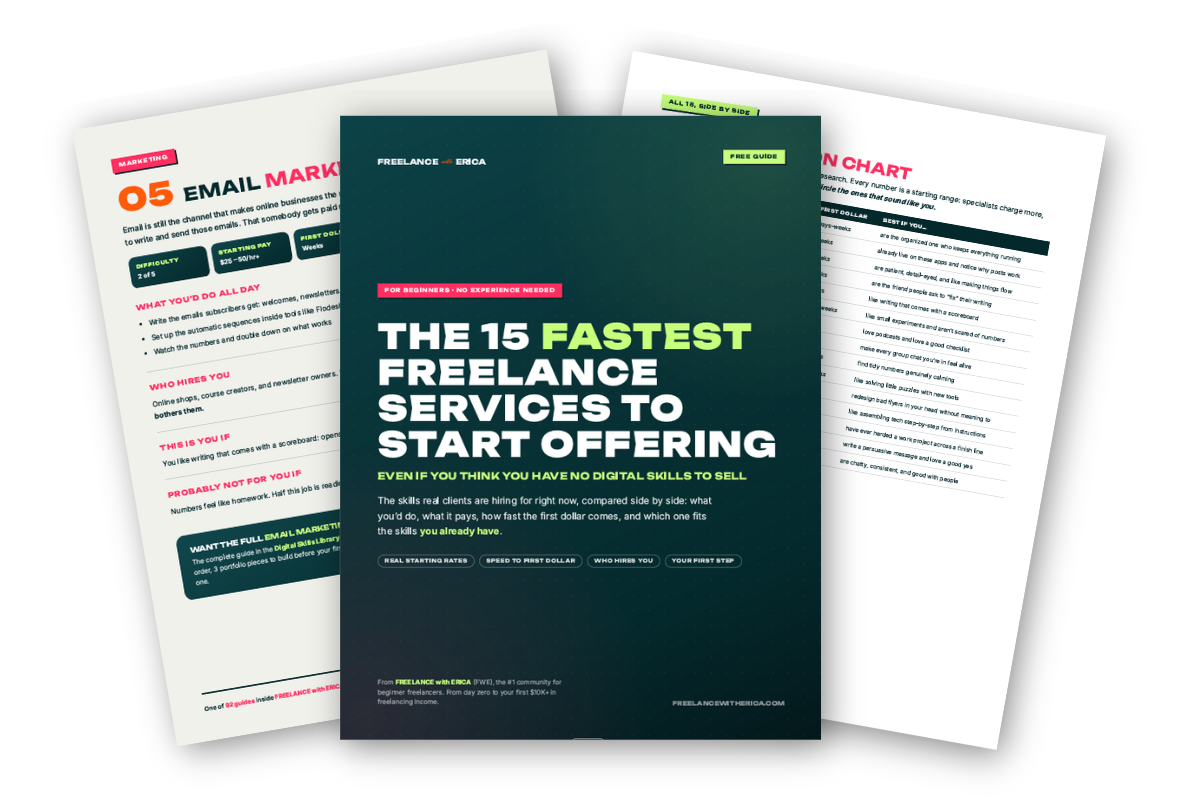
Get The 15 Fastest Freelance Services to Start Offering: all 15 compared side by side, with a clear read on which one fits the skills you already have.
📬 Go check your email!
Your free guide is on its way to your inbox right now. If it plays hide-and-seek, peek in the spam or promotions folder.
Level up later
Skills that stack with tutoring
The highest-earning freelancers combine two or three skills, so the same fluency turns into multiple income streams.
Translation & Localization
Same bilingual asset, a second income stream. Many tutors also translate to diversify and smooth out gaps between students.
Read the Guide →Content Writing
Lesson materials, worksheets, and language blogs are content you can sell, or use to attract direct students off the platforms.
Read the Guide →Personal & Professional Coaching
Turning repeated lessons into a packaged, ongoing program is the same skill coaches build their whole business on.
Read the Guide →Freelance language tutoring FAQ
How much do online language tutors make?+
Most platform tutors charge $15 to $30 per hour, with community tutors lower ($4 to $20) and professional teachers higher ($10 to $40 per lesson). After fees (italki around 15%, Preply 18 to 33%), beginners realistically net $10 to $20/hr, growing to $20 to $40/hr with reviews and structure, and $40 to $80/hr+ with specialization and direct students. Full-time Preply tutors average around $1,400/month. These are positioning-based ranges, not guarantees.
Do I need a degree or teaching certificate to teach a language online?+
Not to start. Platforms like italki let fluent and native speakers begin as community (conversation) tutors with no degree. A teaching certificate (like TEFL) or a degree unlocks "professional teacher" status and higher rates, and exam-prep and business niches benefit from it, but the entry door is genuine fluency plus patience, not a credential.
Is language tutoring a good freelance side income?+
Yes, especially if you're a native English speaker. The setup cost is near zero, platforms connect you to students fast, and demand is high and durable. Early per-hour pay is modest and platforms take a cut, so treat it as an excellent start and side income that you grow by specializing and moving to direct students.
Will AI replace language tutors?+
Unlikely for the human part. AI study apps grew, and demand for real human conversation partners grew right along with them, because learners hit a wall that only live, encouraging practice with a real person breaks. Use AI to prep materials; the human connection is what students pay for.
What's the difference between tutoring and interpretation?+
Tutoring teaches a language to learners over time and is beginner-accessible for fluent speakers. Interpretation converts speech between two languages live, in real time, and requires genuine bilingual fluency plus fast, accurate processing. It's a lane you grow into once you've built that two-language skill, usually after you've been tutoring a while.
Get started, $9/mo
Ready to learn the how?
The full tutoring guide is one piece of the starting tier. Everything on the right comes with it.
- The full Digital Skills Library, all 90+ guides
- The Find Your Freelance Ready Skills training
- The FWE community chat forum
- Weekly co-working calls
- Five monthly contests for cash
- The monthly accountability challenge
- The proposal tracker that comes with it
- Live guest trainings