Getting hired with zero reviews starts with the jobs you choose
You picked a service. You made the profile. You looked at a few successful freelancers, saw what they were charging, and thought, Okay, if I charge less, surely someone will give me a shot.
Then you sent proposals. And more proposals. Your inbox continued its very committed performance as an abandoned building.
I know how frustrating that feels. I started on Upwork with no clients, no reviews, and no idea what the heck I was doing. My first contract paid $10. I would have loved for someone to sit me down and explain why choosing my first few jobs mattered so much.
So, pull up a chair. This is the strategy I teach my students: start with small, quick-turnaround jobs you can do well, build some work history and written feedback, then use that proof when you apply for work in your chosen service.
I call them baby beginner jobs. Yes, that is the technical terminology in this establishment.
Why lowering your rate can leave you in the same place
A client looking through proposals is comparing people with very different amounts of evidence behind them. Some have completed jobs, earnings, feedback, and badges. Your profile may still be doing the zero-zero-zero thing.
That can be true even if you have years of useful experience outside Upwork. The client has to see that experience and understand how it applies before it can help you.
When you apply straight away for a substantial project in your niche, you're asking someone to make a bigger commitment while giving them less platform history to go on. Dropping your rate might make the number more appealing. It doesn't fill in that missing history.
Imagine hiring someone to help with a project you care about. You want to know they can do it, communicate, and finish when they say they will. The bargain price loses some of its sparkle if you're also mentally preparing to babysit the entire project.
Your first goal is to get on the scoreboard. A few completed jobs give future clients more to work with when they compare you with other applicants.
What makes a good baby beginner job?
Look for a small task with a clear finish line. Something you can understand, deliver confidently, and turn around in hours rather than dragging it out for weeks.
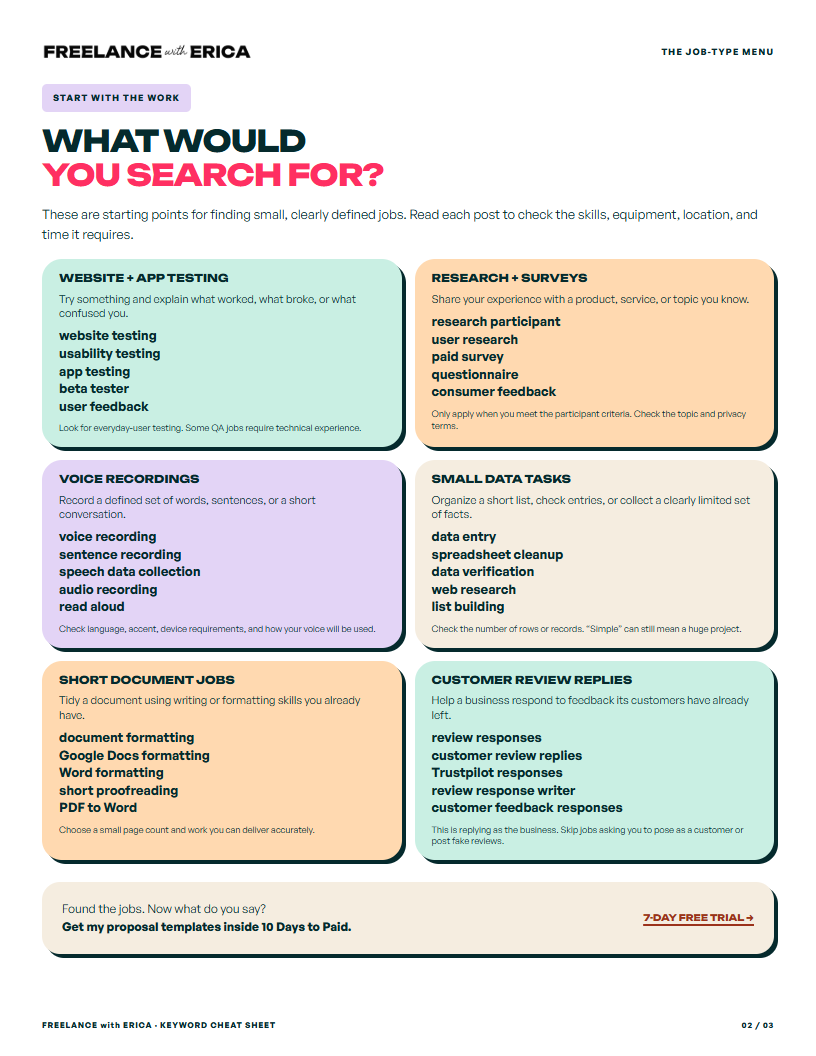
In the training, I talk about things like testing a website or app, completing a research survey, and recording your voice. The right fit depends on what the client needs and what you can do. Sometimes the job has very little to do with the service you eventually want to offer.
That's fine. Your future graphic-design business is not going to burst into flames because your first contract involved testing a checkout page.
- A clear task: you can explain what you're delivering in a sentence.
- A short turnaround: there's a realistic path to finishing quickly.
- A manageable commitment: the scope and fee make sense together.
- A good fit for you: you meet the requirements and can do useful work.
- Multiple hires can be a bonus: some clients need several people to complete the same type of task.
These are often small, flat-fee projects. My reason for recommending them is what a completed job can help you build: experience using the platform, client feedback, and something besides zeros on your profile.
Find them with more useful search terms
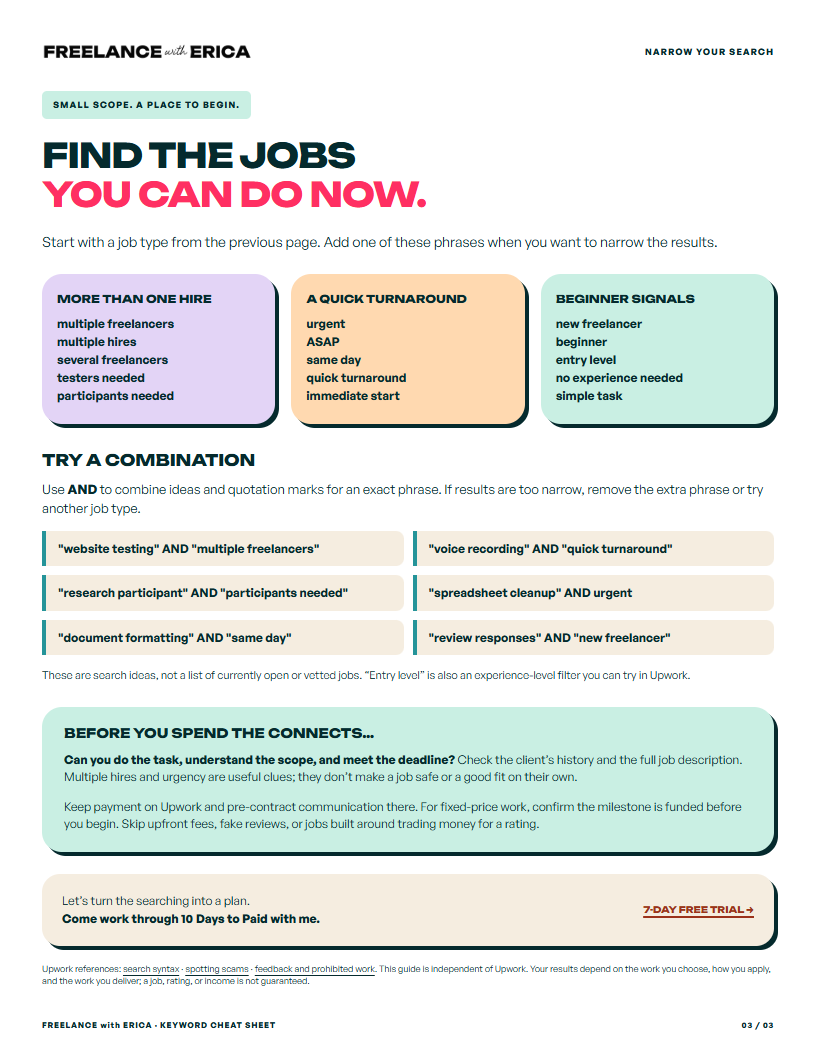
If every search starts with your eventual niche, you keep looking in the same part of the job board. Try searching for the task itself.
Website testing, app testing, and voice recording are starting points. Then read the description. A voice-recording project might need a particular accent or language. A testing job might need a specific device. You still get to choose work that fits.
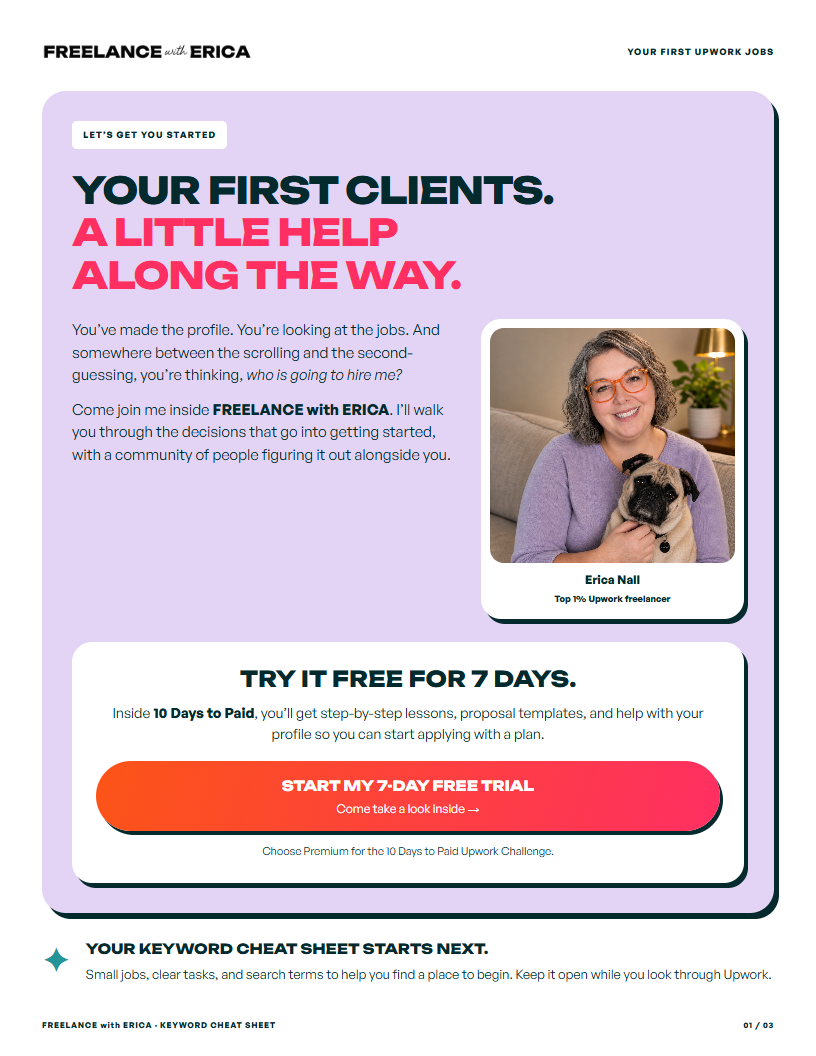
I put together a free beginner-job keyword cheat sheet so you can spend less time trying to guess what to type into the search bar. Keep it open beside Upwork and explore a few searches.
When a job looks promising, check the scope, deadline, client history, and the skills or equipment it needs. The useful question is, Can I do a good job here, with the time and tools I have?
A vague listing that leaves you guessing what “done” means needs clarification before you agree to it. Small should feel manageable.
Give that small job a strong proposal
Finding a better-fit job helps. Your proposal still needs to make it easy for the client to choose you.
Start with what they need, explain how you can help, and give them a simple next step. If they need someone to test a website on an iPhone, tell them you have the right device and can provide the kind of feedback they're asking for. They probably do not need your entire professional origin story, complete with prequel.
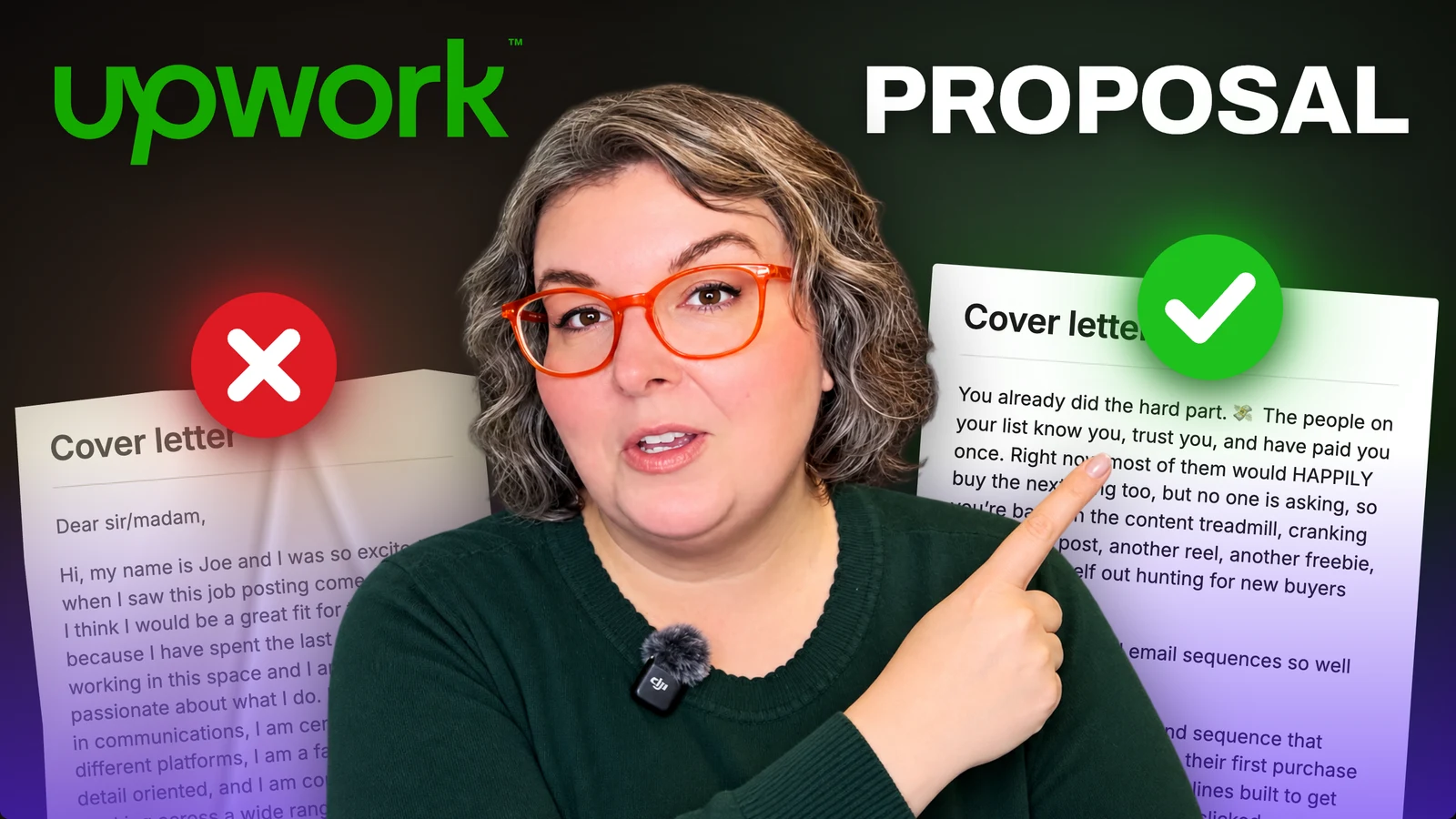
I walk through my approach in 8 rules for writing an Upwork cover letter. There's an example proposal and a free checklist with that training, too.
And if you'd like to work through this with me, the 10 Days to Paid Upwork Challenge is part of what I teach inside FREELANCE with ERICA. You can come explore the community with a seven-day free trial.
How this worked for my kiddo River
River was a 22-year-old Starbucks barista who wanted to move into graphic design. He went through the 10 Days to Paid Upwork Challenge and followed this approach.
His first work involved writing a company's responses to its customer reviews. That became two contracts. His next job was website testing.
He earned five-star reviews on all three, got a 100% Job Success Score, and earned Rising Talent before he finished the challenge. What I love is that he had something useful to show a future client before landing that first graphic-design job.
One of the clients praised his understanding of the brand's identity, his questions and suggestions, and the quality of his work. That's useful feedback for somebody who wants to sell design services.
He asks the right questions, brings valuable suggestions, and consistently delivers high quality work always on time.
From River's client review, featured in the training
A graphic-design client cares whether you understand their brand, ask good questions, and meet deadlines. A small job gave River a chance to demonstrate those things, and a client put them into words for him.
Make your client feedback easy to use
When you finish a job, ask the client for written feedback about working with you. The stars are lovely. The words give you something specific to bring into the next conversation.
You can pull a short, relevant line out of a longer review and use it in your profile or proposal. Choose the part that helps this client understand why you'd be good to work with.
For example, River's review talks about understanding a brand and delivering on time. Either point can be useful when applying for design work, depending on the project.
A testimonial can travel with you. Every time you complete good work and collect useful feedback, you're building something you can keep using as your business grows. I like to tell my students they can sprinkle those little pull quotes around like confetti. Strategic confetti. We are professionals.
Move toward the service you want to offer
I use the first few small wins as a starting goal. Once you have completed work and feedback, bring that evidence into proposals for the service you want to build your business around.
Your proof now has a job to do. Connect the client's words to the work you're applying for, show a relevant sample, and explain what you can deliver. Keep strengthening your profile as you go.
If you're still deciding what to offer, the freelance-skills quiz can help you identify a starting direction. The Digital Skills Library gives you more room to explore the services and skills behind it.
You don't have to plan your entire freelance career before sending the next proposal. Pick a sensible next job. Do it well. Use what you learn.
Your next move
Download the keyword cheat sheet. Find a small job you can confidently finish. Write a proposal that speaks to that client's needs, and give yourself the chance to get on the scoreboard.
When you land it, take the work seriously, communicate, finish what you agreed to do, and ask for feedback. Then bring what you've earned into your next application.
That's the beginning of a freelance business. It can start with a very ordinary little job while the rest of your life continues being the rest of your life.
I'll be over here rooting for your first contract notification. 🧡
A FEW QUICK ANSWERS
Before you open another tab…
What Upwork jobs can beginners start with?
Small website or app testing tasks, voice-recording projects, and research surveys can be starting points when you meet the requirements. Look for clear scope, a manageable deadline, and work you can confidently deliver.
Should my first Upwork job be in my niche?
It can be, but I teach beginners to build early work history with small jobs they can finish well. Those jobs may be outside your eventual service. Bring the resulting experience and feedback into your niche applications.
How do I use feedback from a job outside my niche?
Choose relevant lines about communication, reliability, understanding a brand, or delivering good work. Explain how that strength helps with the new project, and pair it with a relevant sample.

YOUR GUIDE · ERICA NALL
I’m an Expert-Vetted freelancer and sales copywriter. I teach beginners how to find their freelance skills, write stronger proposals, and start working with clients.
A little more about me ↗Made with Peter Gray. Peter helped bring this training to life through strategy, research, editing, and thumbnail design. Visit his YouTube for Coaching & Skool community.