Digital Skills Library · Legal
Can you freelance in public law?
Real 2026 attorney rates ($80–450/hr for licensed public-law attorneys), what the job involves, and the real on-ramps if you love policy and government but don't have a law license yet, the research and writing lanes were practically built for you.
Difficulty
5 of 5
Law degree and bar admission required, no way around it
First dollar
N/A for non-lawyers
No fast path without the license; fast if you already have it
Startup cost
Very high
The real cost is law school and the bar exam, for the licensed path
AI-friendliness
High as a research aid
Regulations shift; AI states stale versions confidently. Human, licensed judgment is non-negotiable
Demand
Steady, but gated
Government and regulation are permanent; the research and policy-writing layer is very accessible
Start here
Get the real deal
This page shows you what freelance public law work is like: the pay, the services, and whether it fits you. And if you're policy-obsessed but not a licensed attorney, here's the good news: the research and writing lanes right next door are a great fit for you. The full guide inside the Digital Skills Library splits cleanly in two: what applies if you're already a licensed public-law attorney, and what applies if you're not, so you know exactly which door is yours. Here's what unlocks for this guide:
- 🔒 The split up front: what applies if you're a licensed public-law attorney, and what applies if you're not
- 🔒 Why the research and policy-writing lanes are built for the policy-minded
- 🔒 The real on-ramp for non-lawyers: legal and policy research, paralegal support, and policy/research writing
- 🔒 Ready-to-use AI prompts for research memos, regulation explainers, and client communication in the adjacent lanes
- 🔒 Which adjacent lane fits you, and how it grows into standing income from policy organizations
- 🔒 The boundary toolkit: exact language for declining anything that crosses from explaining a rule into advising on it
- 🔒 The big-picture map: where this leads for a licensed attorney, and where it leads for everyone else
- 🔒 Updates whenever the regulatory landscape and the market change
The skill, straight
What does a public-law attorney do?
Public-law attorneys advise clients on regulatory matters, represent them before government agencies or in court, and argue public-law cases. It's a licensed profession, and it's unusually research- and writing-heavy, which is exactly why the adjacent lanes below are such a genuine fit for anyone who cares about policy and government but isn't licensed.
01
Advise on regulatory and administrative matters
Interpreting agency rules and telling a client how to comply, putting a bar license and real legal liability behind the answer.
02
Represent clients before agencies and courts
Administrative proceedings, public-interest litigation, appearing on a client's behalf, work only a licensed attorney can do.
03
Draft formal rulemaking submissions as counsel
Filing a regulatory comment or submission on a client's behalf. That representation right is exactly what the license buys, and exactly why it can't be skipped.
Is public law right for you?
Yes
You're a bar-admitted attorney working in administrative, regulatory, or public-interest law who wants to freelance. The credential is the moat.
Maybe
You're fascinated by policy, regulation, and how government works, you read agency rules for fun, and you write clearly, but you don't have a law license. The legal-research and policy-writing lanes were practically built for you.
No
You wanted to advise on or litigate regulatory matters without the credential. That's gated. But the research and writing doors next to it are real and well-suited to a policy brain.
Best for licensed public-law attorneys who want to freelance. For the policy-minded without a license, research and policy-writing are your real home here.
Pick a lane
Public-law services you can sell
This splits by licensure. Clients are buying one of two things: a binding advisory answer from a licensed attorney, or, if you're not licensed, the research and clear writing that gets an attorney or organization there. The bright line, in one sentence: research, organize, summarize, and write about policy, yes. Advise on regulatory matters or represent anyone before an agency, never.
Your Free Unlock
Get the full member version of this guide, free
Everything on this page is the short version. The member guide goes all the way: the step-by-step learning plan, the tools, the AI prompts, and the practice projects that build real skill. Every person gets one guide free, and it can be this one.
Unlock This Guide Free → One Free Guide Per PersonAlready unlocked a guide, or already a member? Log in here.
How the money grows
The reality ladder
One gated rung, and three real, accessible adjacent lanes, all rewarding for a policy brain. These prices are market averages, and premium freelancers charge well beyond them.
Reality check
This rung is gated
Licensed attorneys only
Advising on administrative or regulatory matters, representing clients before agencies or courts, and arguing public-law cases require a law license. No beginner version exists.
Adjacent (open to you)
Legal & policy research
$23–60/hr+
Researching statutes, regulations, agency rules, and public policy for an attorney or organization to interpret.
Adjacent (open to you)
Paralegal / legal assistant support
$45–125/hr+
Organizing case files, preparing regulatory filings for attorney review, tracking comment deadlines.
Adjacent (open to you)
Policy & research writing
Varies
Summarizing regulations and policy into briefs and memos. The writing-side adjacent that doesn't require a license.
Who hires for public law?
A new regulation, an open comment period, a compliance deadline, or a policy campaign. You've heard every one of these:
People hire a freelance public-law attorney the moment a regulatory matter needs a licensed hand. Think tanks, nonprofits, and advocacy organizations are the biggest buyer of the adjacent policy-writing lane specifically, and it's a constant, accessible market. That's where a non-lawyer freelancer fits, and fits well.
The numbers
How much do freelance public-law attorneys make?
Let's talk money, but let's be straight about who it's for: the strong rates on Upwork's public-law listings, $80–200/hr and up for specialists, belong to licensed attorneys. If you don't have the bar card yet, those rates aren't available to you, because the work requires the license, full stop, and I'm not going to dangle those numbers in front of you like they're within reach. The ranges below are an example of what average freelancers charge on Upwork in 2026, and they're a good reference while you're starting out. Inside FREELANCE with ERICA, you'll learn how to position your services for premium pricing over time.
No degree needed
Not a from-zero lane
There's no realistic path here without a bar license. Your real entry point is legal & policy research, paralegal support, or policy writing.
Attorneys only
$80–200/hr+
A licensed public-law attorney building a freelance or part-time practice.
Advanced
$200–450/hr+
Reputation-driven work for licensed attorneys with a recognized regulatory specialty.
For someone who loves policy and writes well, the research and policy-writing lanes are a real, satisfying freelance path. No law degree required.
One more thing, and I want you to really hear this: those ranges are averages, and averages have zero say over what you get to charge someday. As you work through my courses, you'll learn how to stack skills and position your services, so you can become a premium freelancer who charges above the market. Here's my own example: I'm a sales copywriter. Look up copywriters on Upwork and you'll see averages between $10 and $75 an hour. I regularly charge over $200 an hour for the same skill, because there are clients who happily pay for real expertise, and you only need a handful of them.
Free guide
Not sure this is your lane?
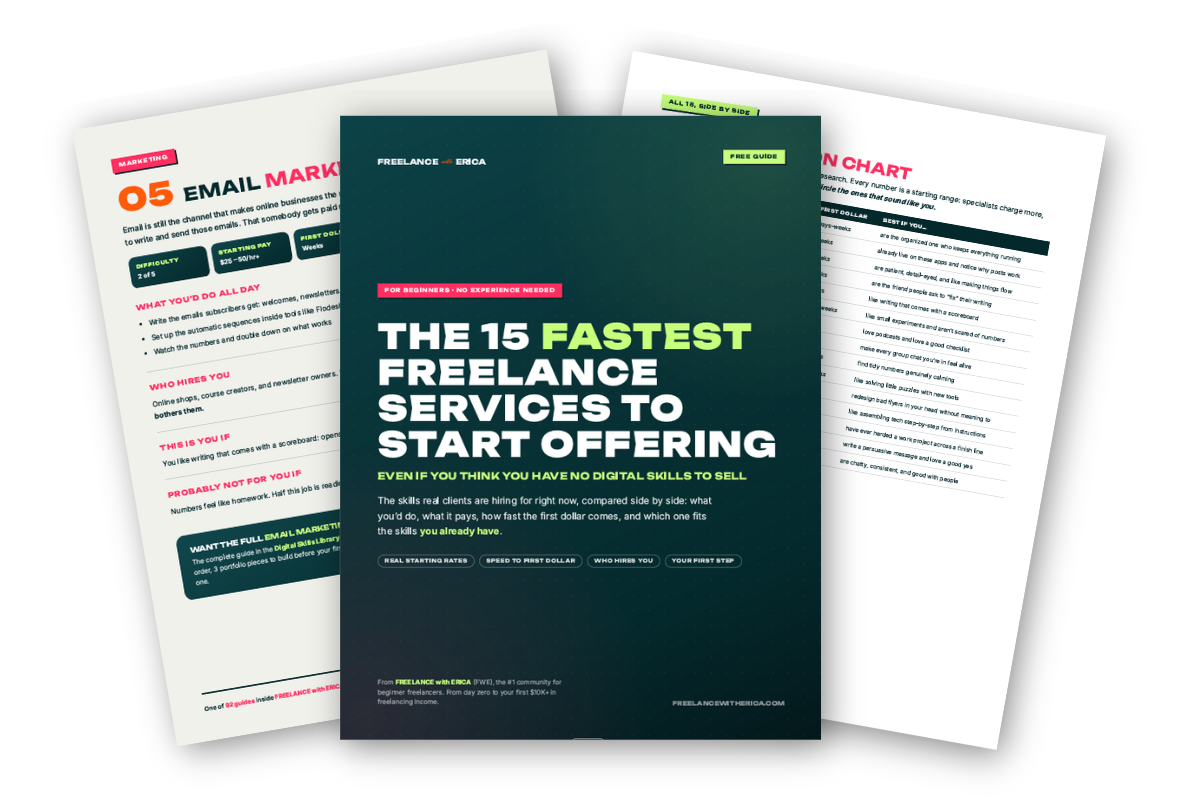
Get The 15 Fastest Freelance Services to Start Offering: all 15 compared side by side, with a clear read on which one fits the skills you already have.
📬 Go check your email!
Your free guide is on its way to your inbox right now. If it plays hide-and-seek, peek in the spam or promotions folder.
Level up later
The real adjacent lanes
If you're not licensed, one of these three is your actual freelance home. Each is a genuine, beginner-accessible lane, and if you're drawn here by a policy brain, they were practically built for you. Read the one that fits you.
Legal Research
Public law is research-heavy. Attorneys and policy orgs need ongoing statute and regulation research. No law degree required.
Read the Guide →Paralegal / Legal Assistant
Regulatory filings and case files need organizing and prep. The established no-degree support path.
Read the Guide →Content Writing
Policy summaries, regulatory explainers, and research briefs are a writing lane in their own right, accessible and in demand from policy orgs.
Read the Guide →Freelance public law FAQ
Can I do public or regulatory legal work without a law degree?+
You can research and write about regulation and policy, and you can support attorneys as a paralegal, but you can't advise on regulatory matters or represent clients before agencies without a license. That's the practice of law. The research, support, and policy-writing lanes are open and a strong fit for the policy-minded.
What's the difference between policy research/writing and practicing public law?+
Policy research and writing means finding, summarizing, and explaining what the rules are, for an attorney or organization to act on. Practicing public law means advising a specific client on what to do or representing them before an agency or court. The first is open to you; the second requires a license.
I love policy and government but I'm not a lawyer. Where do I start?+
Start with Legal Research (for the attorney-support angle) or the Writing category (for policy/research writing aimed at think tanks and nonprofits). Both reward a policy brain and neither requires a law degree.
If I'm a licensed public-law attorney, is freelancing worth it?+
Yes. Regulatory and public-interest work has real freelance and part-time demand from firms, nonprofits, and compliance teams. Your license is the moat.
Can AI summarize regulations for clients?+
For organizing and first-draft summaries of public rules, AI helps, with verification, because regulations change and AI cites stale versions confidently. But using AI to advise a client on a regulatory matter is both unreliable and the unauthorized practice of law for non-lawyers. Keep AI to research and drafting, never advice.
Get started, $9/mo
Ready for the full breakdown?
The complete public law guide is one piece of the starting tier. Everything on the right comes with it.
- The full Digital Skills Library, all 90+ guides
- The Find Your Freelance Ready Skills training
- The FWE community chat forum
- Weekly co-working calls
- Five monthly contests for cash
- The monthly accountability challenge
- The proposal tracker that comes with it
- Live guest trainings